Answer #3: By designing so that the structure may be one with the environment.
There are countless designs that integrate the environment with the structure resulting in a completely new and revolutionary project. A rooftop garden would be a great yet simple way to to this because not only is the garden allowing for additional insulation, it is also helping the native plants by giving them a space to grow. Another way that the environment can be used fro designing a structure is by placing it within a mountain allowing for coverage of cold breezes and allows for the light to come in. By placing a structure within the hill or mountain can reduce the energy bills of the structure allowing it to be efficient and one with the environment. Making/ designing a structure to be green may be good but designing it in order to be one with nature and still efficient is priceless.
Wednesday, March 26, 2014

Tuesday, March 4, 2014
Fourth Interview Questions
1). How can materials affect the way that can energy, money, and time can be saved?
2). What alternative building materials would you say are the most effective to build from?
3). What are the most important factors an architect should consider when designing a green structure?
4). How much information can be learned from previously built green structures?
5). How is designing a green structure from designing a regular structure?
6). Does designing green help the environment other than by saving energy?
7). What are the characteristics of a green building?
8). How can green building become a better known topic throughout the world?
9). What characteristics of green design can sometimes be out off during the design process?
10). Why do you think that window orientation can sometimes be overseen as helping the structure be green?
11). How can an architect make sure that the window orientation can be effective as well as aesthetically pleasing?
12).When throughout the designing process should the window orientation be considered?
13). What is the most difficult thing about designing a green building?
14). Which has the most energy savings? And in what ways? Residential, commercial, or industrial.
15).How does the L.E.E.D. do its screening on the structure that was built?
16).What are the biggest features that LEED looks for when doing its screening of the structure?
17). What green characteristics can be done by a homeowner?
18). What are simple yet effective energy saving ideas that can be done by a homeowner?
19). Do all green characteristics have to be done by an architect or engineer?
20). Does designing a green building longer? If so, by how much and why?
2). What alternative building materials would you say are the most effective to build from?
3). What are the most important factors an architect should consider when designing a green structure?
4). How much information can be learned from previously built green structures?
5). How is designing a green structure from designing a regular structure?
6). Does designing green help the environment other than by saving energy?
7). What are the characteristics of a green building?
8). How can green building become a better known topic throughout the world?
9). What characteristics of green design can sometimes be out off during the design process?
10). Why do you think that window orientation can sometimes be overseen as helping the structure be green?
11). How can an architect make sure that the window orientation can be effective as well as aesthetically pleasing?
12).When throughout the designing process should the window orientation be considered?
13). What is the most difficult thing about designing a green building?
14). Which has the most energy savings? And in what ways? Residential, commercial, or industrial.
15).How does the L.E.E.D. do its screening on the structure that was built?
16).What are the biggest features that LEED looks for when doing its screening of the structure?
17). What green characteristics can be done by a homeowner?
18). What are simple yet effective energy saving ideas that can be done by a homeowner?
19). Do all green characteristics have to be done by an architect or engineer?
20). Does designing a green building longer? If so, by how much and why?
Wednesday, February 26, 2014
Advisory Meeting #2
EQ
Answer #2: An important factor to consider when designing a green structure are the materials that will be used for the construction of the structure.
The whole idea of being green does not mean just saving energy when the building is complete, it also means that energy has to be saved when the structure is being built.
1). By using materials that are on site there is no need for gasoline to be wasted on transportation of materials to the site of the construction. For example, a new and great idea is building with the dirt that is found on the site, this will reduce the energy and time lost because all the essential building materials will be at the builder's disposal.
2). Building with materials that are "cut to the job" can help save money and materials that may not be able to be used other places. One example of this is if you have a piece of wood that is 6"x 60" but the only available pieces of wood are 6"x 75". This would mean that out of every piece of wood 15" is being lost and being thrown away because it was not cut specifically for the job.
3). Using green materials can also help with money and savings over time. For example, a "green" type of insulation may be cheaper as well as more efficient at its job than regular insulation.
That is why materials are a significant factor when designing a green structure.
Answer #2: An important factor to consider when designing a green structure are the materials that will be used for the construction of the structure.
The whole idea of being green does not mean just saving energy when the building is complete, it also means that energy has to be saved when the structure is being built.
1). By using materials that are on site there is no need for gasoline to be wasted on transportation of materials to the site of the construction. For example, a new and great idea is building with the dirt that is found on the site, this will reduce the energy and time lost because all the essential building materials will be at the builder's disposal.
2). Building with materials that are "cut to the job" can help save money and materials that may not be able to be used other places. One example of this is if you have a piece of wood that is 6"x 60" but the only available pieces of wood are 6"x 75". This would mean that out of every piece of wood 15" is being lost and being thrown away because it was not cut specifically for the job.
3). Using green materials can also help with money and savings over time. For example, a "green" type of insulation may be cheaper as well as more efficient at its job than regular insulation.
That is why materials are a significant factor when designing a green structure.
Wednesday, February 12, 2014
Independent Component 2 Approval
1. Describe in detail what you plan to do for your 30 hours.
3. And explain how what you will be doing will help you explore your topic in more depth.
4. Post a log on the right hand side of your blog near your other logs and call it the independent component 2 log.
- For the 30 hours I plan on studying the blueprint for sustainable buildings and the benefits as well as the flaws. Hopefully this will give me more possible answers for the near future.
- I will volunteer with my mentor Erik Peterson.
3. And explain how what you will be doing will help you explore your topic in more depth.
- This will give my topic more depth because it can lead to possible answers.
4. Post a log on the right hand side of your blog near your other logs and call it the independent component 2 log.
Thursday, February 6, 2014
Independent Component 1
- LITERAL
(a) “I, Bryan Uribe, affirm that I completed my independent component which represents 30 hours of work.”
(b) I completed my 30 hours with my mentor Erik Peterson
(c) Log of 30 hours. - (d) Since my mentor was moving from the building that he was working, I was unable to really do any real research work with him but the conversations that we had the the research that he provided and helped me achieve made up for the lack of work. Since I was getting more time with research I decided to do my independent component on an essay or a breakdown on some of the sustainable buildings that my mentor, Erik Peterson, had showed me.
- INTERPRETIVE
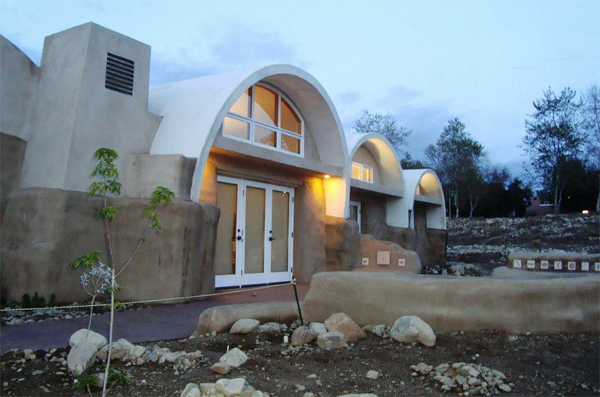 |
| This was a superadobe building that Erik Peterson deisgned and that he gave me a tour of. The concept of building with the dirt on-site is a new yet efficient idea. |
 |
| Here is how the structure looked during construction. Each bag is full of the on-site dirt. |
 |
| This was the Western Christian School located in Claremont. It may seem like any other building but in fact it is extremely unique. |
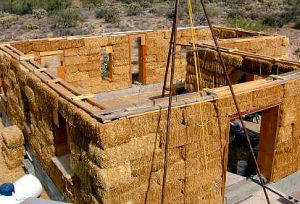 |
| The Western Christian School looks similar to this structure because it is also built with straw-bales as a substitute for insulation and walls.
Learning about the different ways that a building can be sustainable from window orientation to the actual material that a structure is built from can drastically affect the sustainability of the structure.
|
- APPLIED The component helped me better understand the foundation of my topic by allowing me to connect the actual building with the blueprints that I had organized and asked questions about. Two specific examples of were of the Bridges Hall of Music for Pomona College in Claremont and The Super Adobe Building for Uncommon Good in Claremont. I was finally able to see how the blueprints corresponded to the final building. Erik Peterson also gave me tours of many of the buildings and explained the benefits and some of the flaws behind many of the different types of sustainable designing.
Friday, January 31, 2014
Lesson 2 Reflection
1). I made time which seemed to be a problem for some other students.
2). a. AE-/P+
b. I met all of the "P considerations", I had two 3D cardboard props, and four published sources that were referenced.
3).What worked for me was the order in which I went because I got to see some examples while i still got to present so I could get it over with.
4). The thing that did not work for me was the projector blinking on an off the entire time that i was presenting which made it hard to focus and explain the content.
5). I think my answer #2 will be something to do with technology and the change that architecture has undergone because of it.
2). a. AE-/P+
b. I met all of the "P considerations", I had two 3D cardboard props, and four published sources that were referenced.
3).What worked for me was the order in which I went because I got to see some examples while i still got to present so I could get it over with.
4). The thing that did not work for me was the projector blinking on an off the entire time that i was presenting which made it hard to focus and explain the content.
5). I think my answer #2 will be something to do with technology and the change that architecture has undergone because of it.
January:Extra Blog
This month was very different from the others because this month I was helping my mentor move out of the building that the firm was located. This affected my independent component because the volunteer hours that I was working were not completely relevant to architecture.
Subscribe to:
Comments (Atom)